

How To: Cook with Fire
Build a Backyard Parrilla With The Modestos

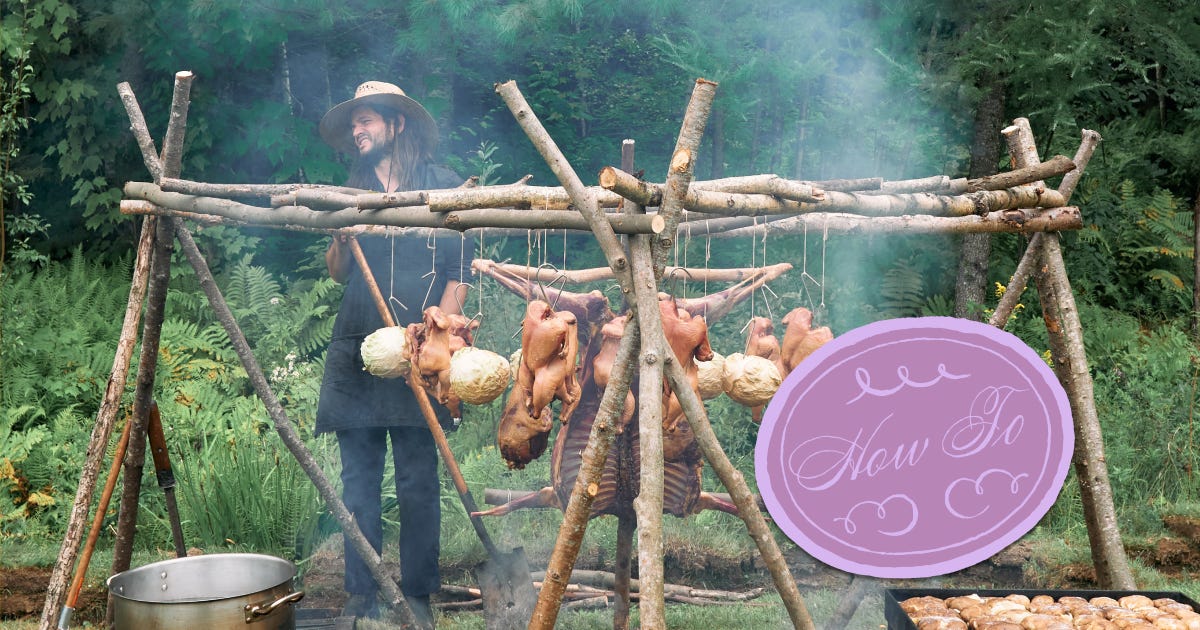
Meet The Modestos. Led by Chef Norberto and known for their open-fire cooking style, their work is heavily influenced by their own Argentinian roots. They often collaborate with local, ethical farms to source as many ingredients as possible to produce meaningful events centered around fire and food.
Today, they’re sharing a simple (but delicious) way to cook with fire.
When people think of South American cuisine, especially Argentine, they think of big open fire parrillas — Francis Mallmann-style “cages” with hanging vegetables and whole lamb cooked on a cross. While this is all accurate, when you drive through the Argentine countryside or visit peoples homes, you are more likely to see a much more quotidien, humble set-up. Every home, construction site and parking lot has some form of DIY parrilla built from whatever is available– scraps of metal and old bricks mostly. Here, among what looks like detritus, you will find some of the tastiest food in Argentina.
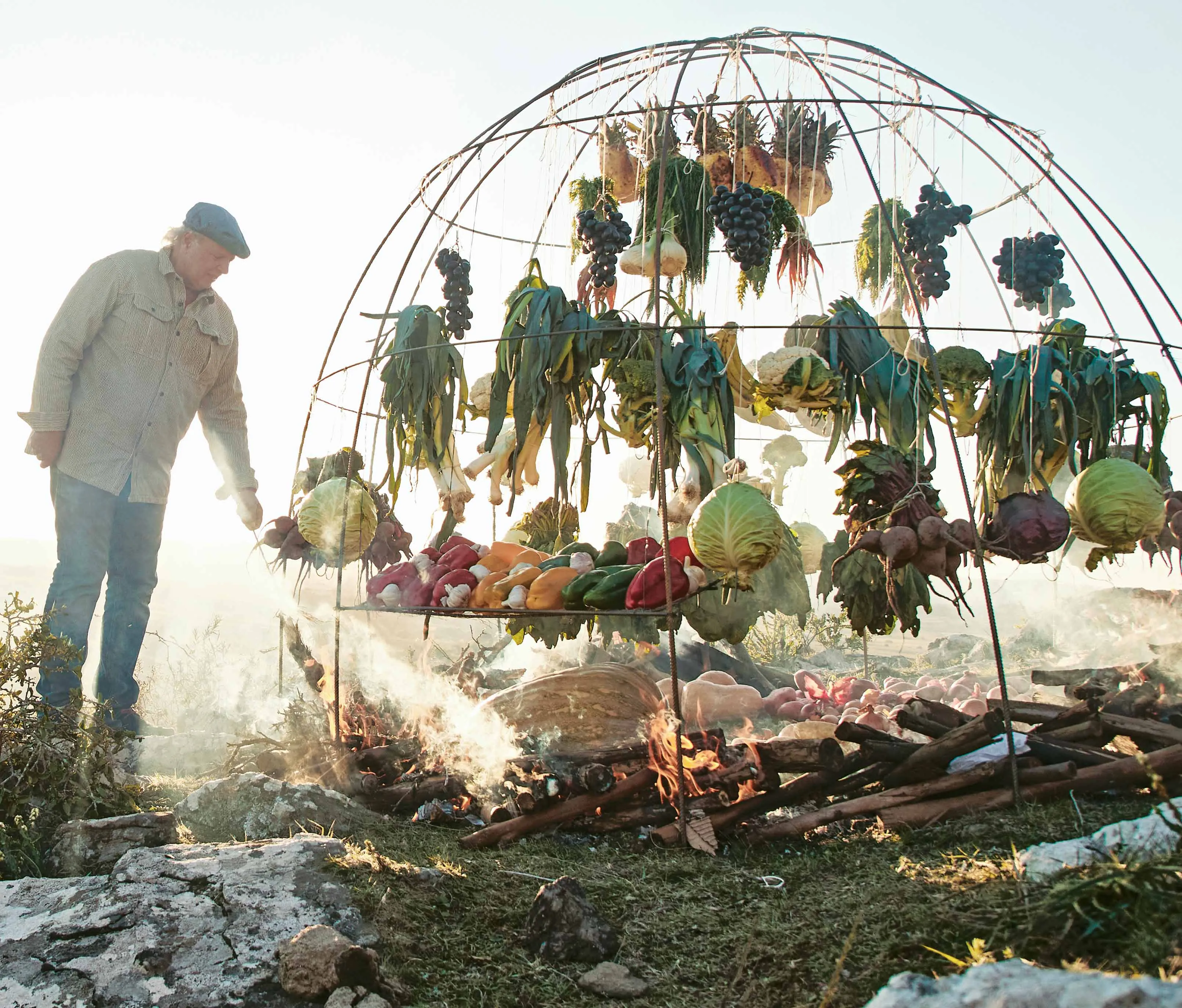
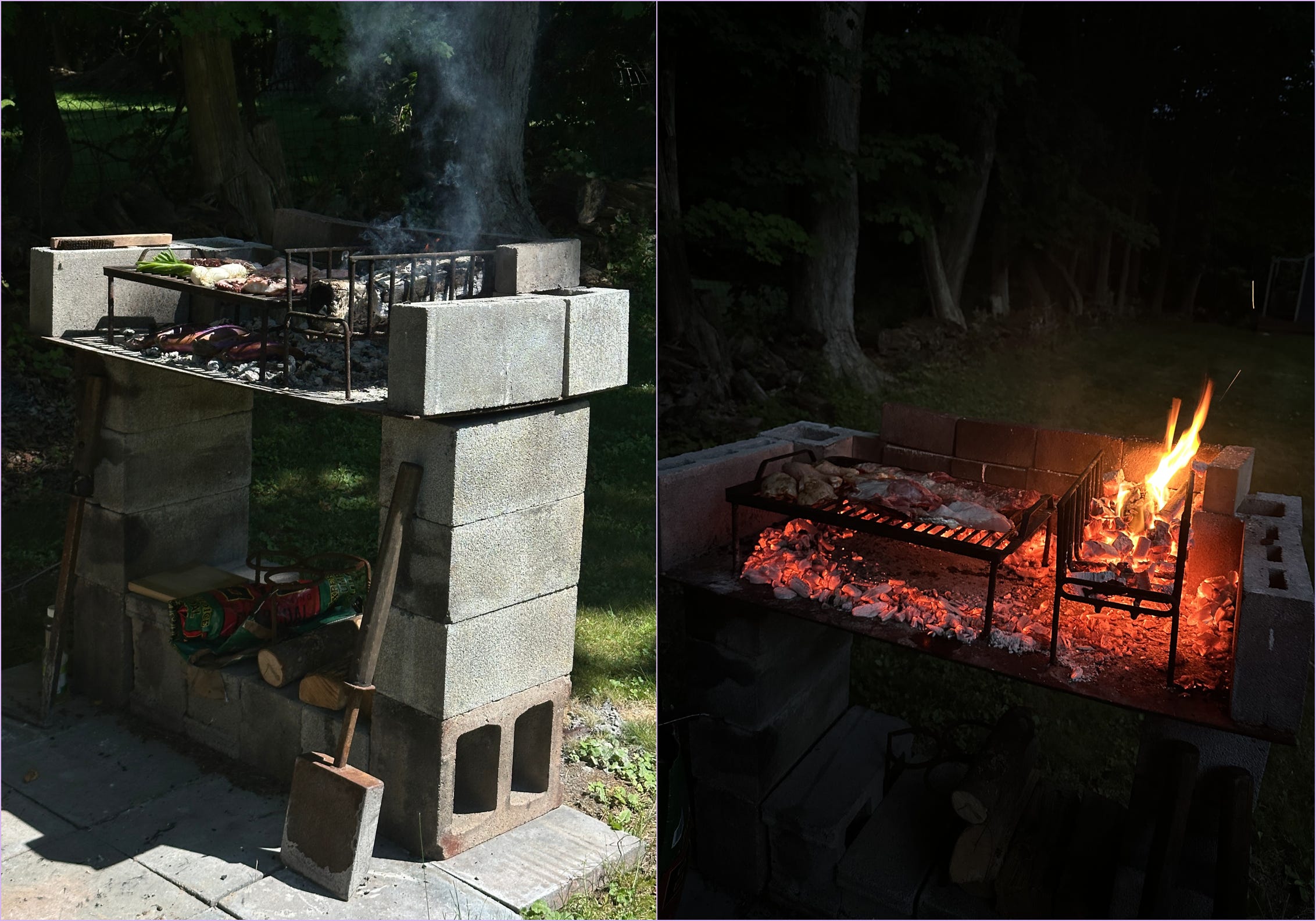
As The Modestos, people see our flashy event set-up and assume at home we have some high-end argentine grill (like this), but in fact, like our family back in Argentina, we have a humble, DIY set-up that gets the job done and required very little financial investment. This is something we use on a weekly basis to cook outside, over the fire, with friends. You can build one too!
Supplies List:
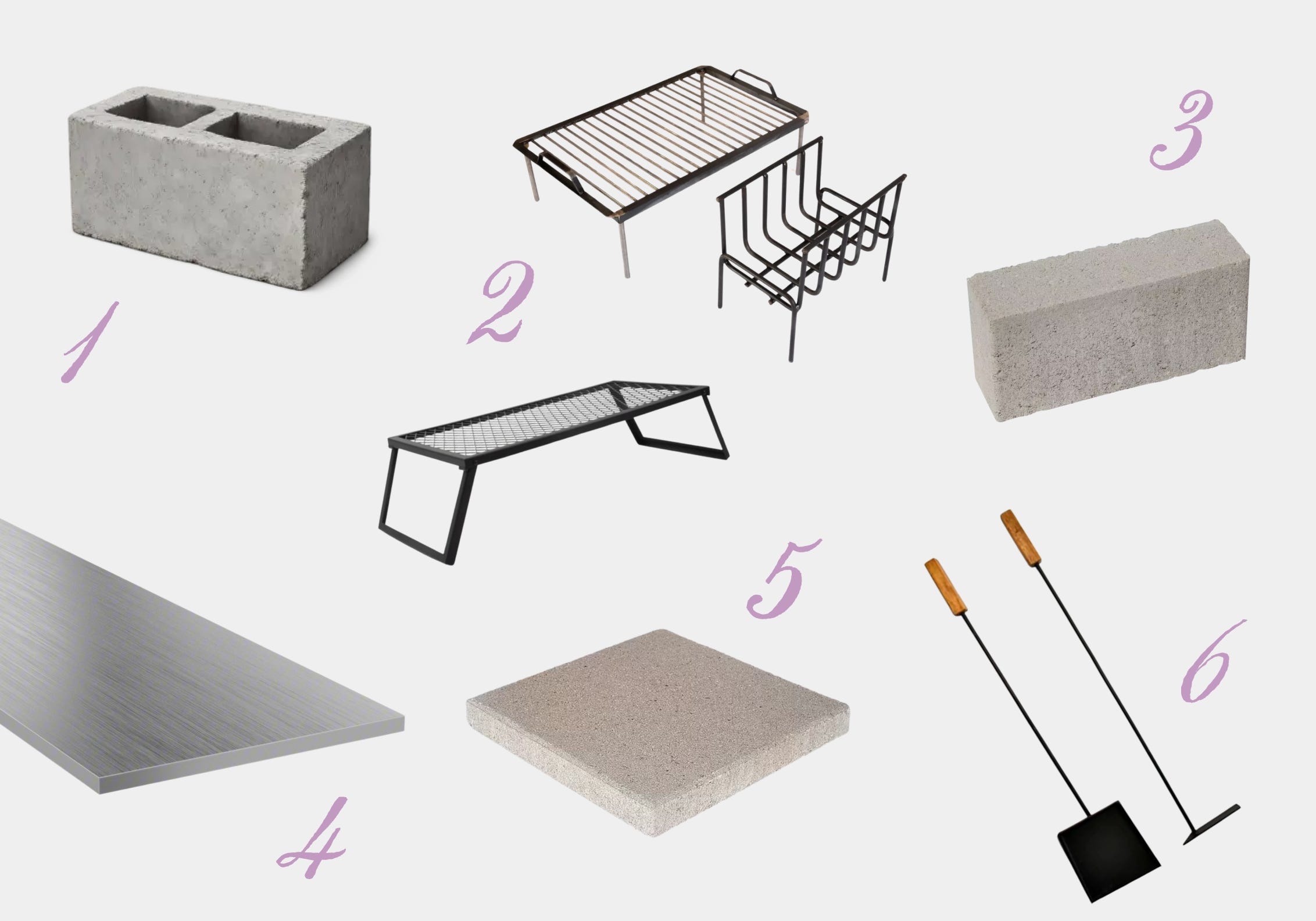
Find a relatively flat surface in your yard and lay the pavers. This can be as big or small as you want, ours is about 4 x 5 ft. You want this to be as level as possible. (You can forgo this step completely if you have a stone patio, or a relatively level surface for your grill.)
Arrange your concrete cinderblocks, stacking about 4 of them on each side. Scale this up or down based on your height. You want your grilling surface to be about counter height. The width should be relevant to the width of your carbon steel plate. You can add some additional blocks at the base to create a sort of shelf for storing coals, wood and grill equipment.
Lay your carbon steel plate across the cinder blocks, securing it with additional cinder blocks or bricks on top, on either side, and across the back. You want to create a nice shield from wind. You should have three “sides” with the front open for cooking. The carbon steel is where your fire and coals will lay, so you want it pretty flat and sturdy.
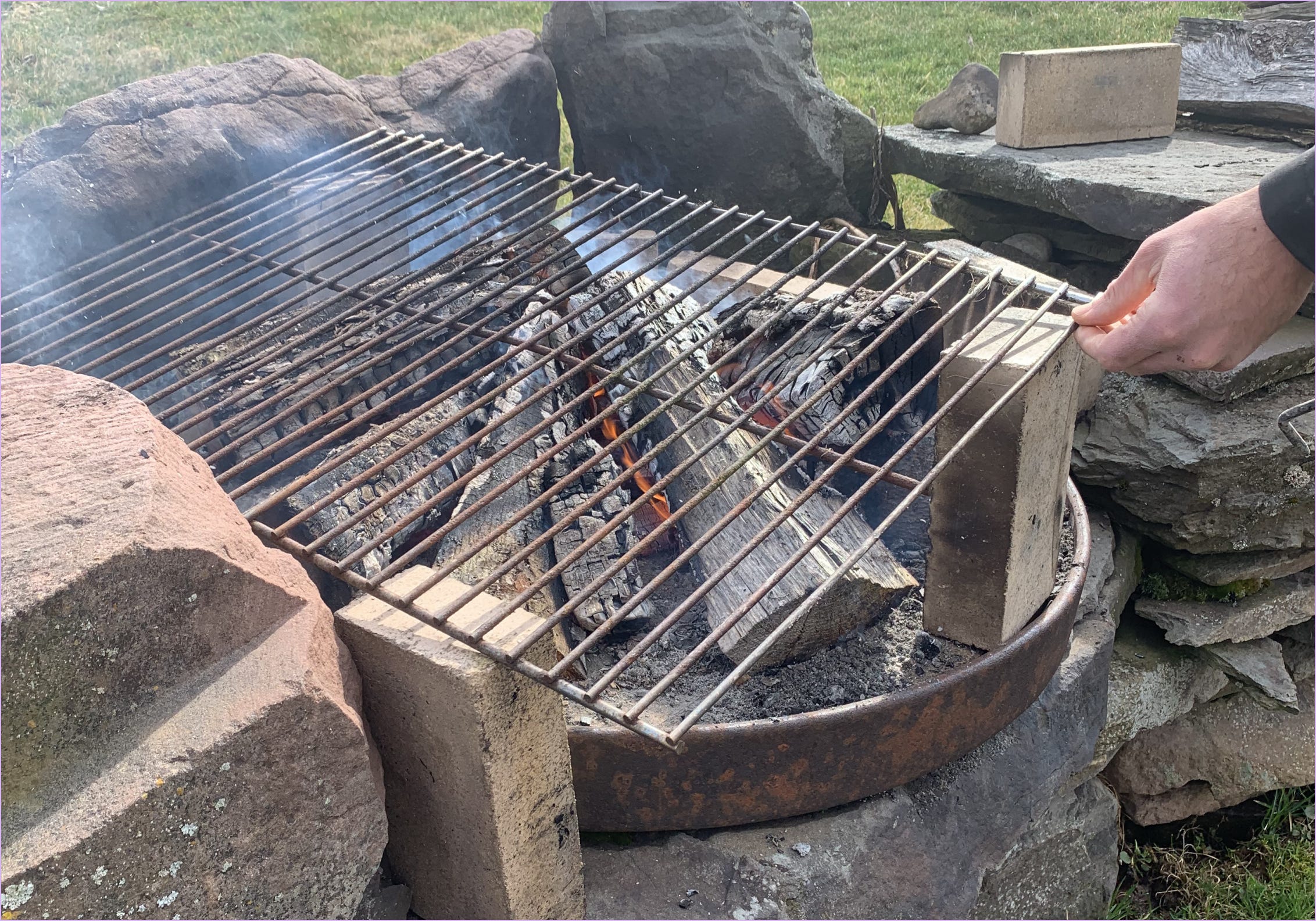
For the parrilla, you have a few options. You can either get any type of grate suitable for fire (something like this) or you can spring for a proper “fire basket and grate” (we love this one from Etsy). The advantage of the fire basket is more control. You can build your fire on one side and then spread the fallen coals across the carbon steel for a slow, even cooking (more on this later…)
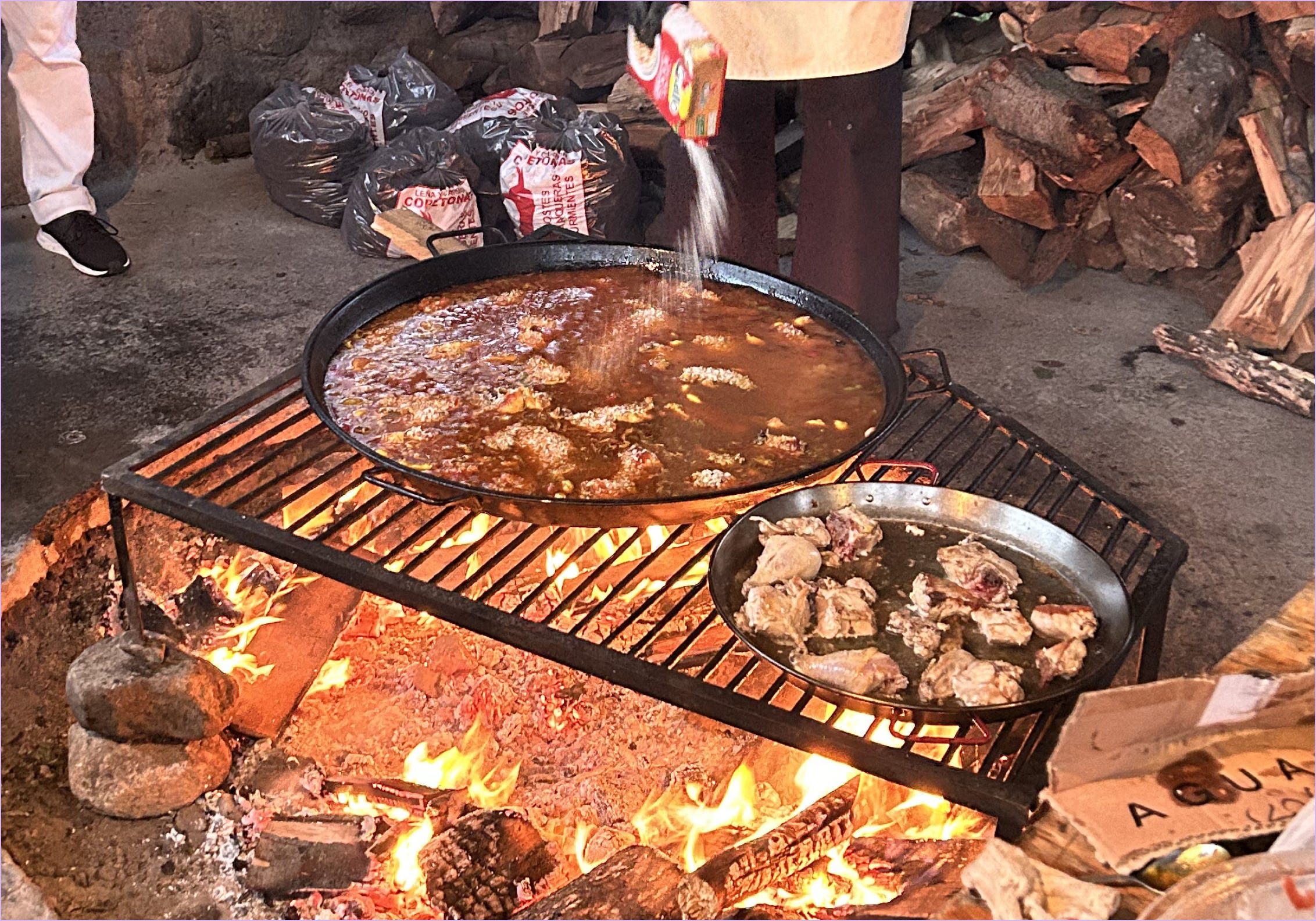
Grilling time! About an hour before you want to eat make sure to take your meats out of the fridge to temper and if you haven’t already, salt them generously. While the meat tempers you’ll want to light your fire. It takes time for coals to build and you’ll be cooking over coals not fire. You’ll want a mix of charcoal and smaller pieces of wood for this, like oak, ash, maple, cherry and apple wood are all really great and flavorful for open-fire cooking. You’ll build and tend the fire inside of the grill basket, starting with kindling and adding larger pieces as you go. Over time the fire will begin producing coals which will fall through the grate and collect just below the basket. You’ll want a tool like this poker to help spread the coals.
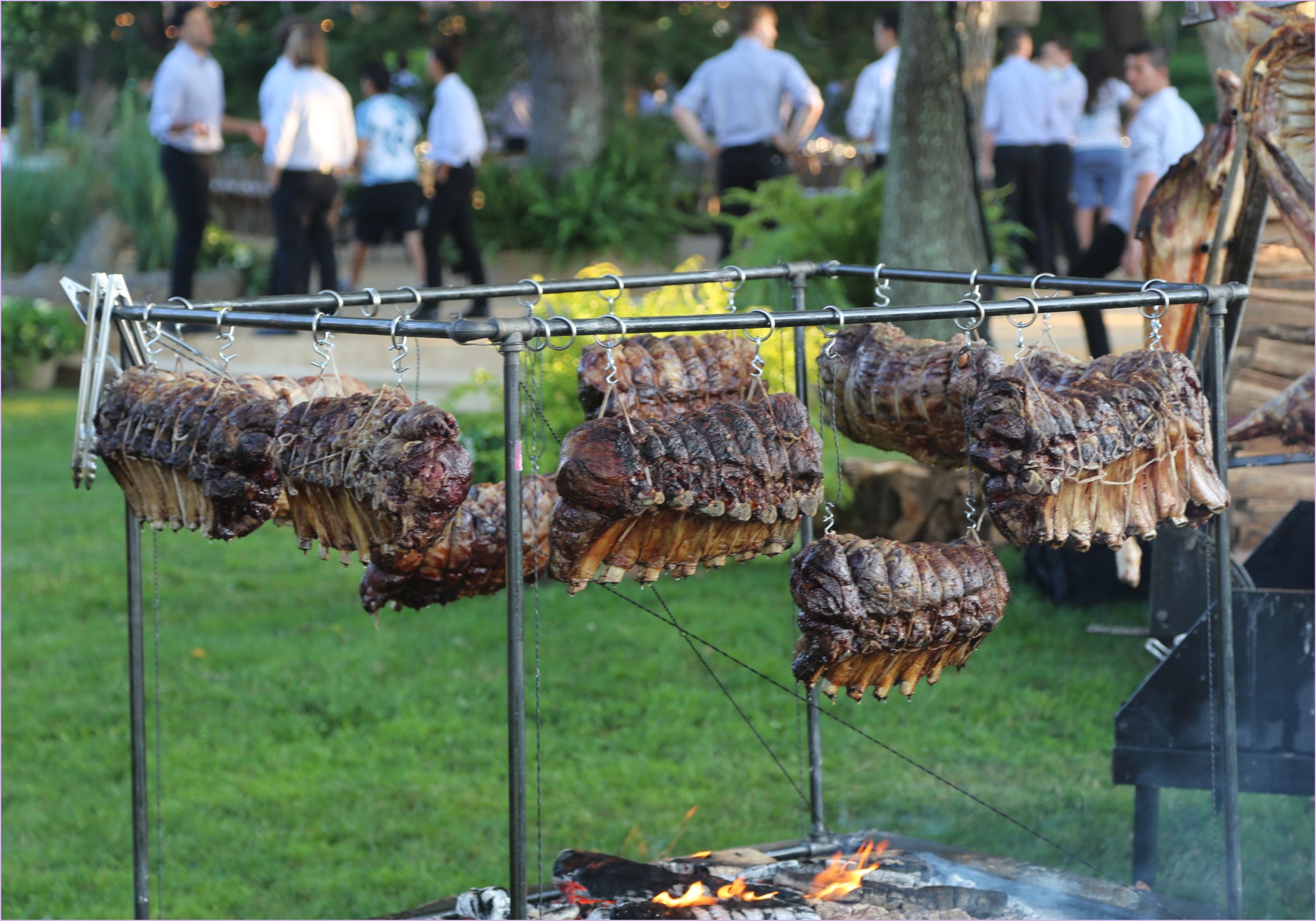
Once you have enough coals, you’ll use your tool to drag them from below the basket to under the grate. Let the coals sit under the grate for about 10-15 minutes to heat up. Wipe the grate down with oil once it’s hot and then place your meat on the center of the grate. The best way to build even heat is to arrange the coals in a circle around the perimeter of the grate. To cook things low and slow, you’ll want the center (just below the meat) to be empty of coals. If you place the meat directly above the coals it may cook too fast.
The carbon steel retains heat incredibly well, so the ambient heat will cook the steaks. If you feel there isn’t enough heat, or you want to speed up the cooking, you can add more coals or push them into the center. This also goes for anything you want to cook on high heat, quickly. More coals = more heat.
For thinner cuts of meat like skirt steak, it should take about 10 minutes per side for medium-rare. For thicker cuts like ribeye it will be more like 15 - 20 minutes. This isn’t a perfect science, remember, you’re not cooking stovetop, so use your best judgement or a thermometer if you’re not sure. The more you cook over fire, the more you’ll figure out how to control the temperature and perfect your cooking process.


BONUS: While the meat cooks, you can throw veggies like potatoes, onions or squash into the coals to cook. They will have a burnt exterior that, once peeled, reveals a succulent, slow cooked interior.
This interview has been edited for length and clarity. To inquire about working with The Modestos for an upcoming event, fill out their online form.

In today’s etiquette lesson, some charmingly specific “don’ts” from Tiffany’s Table Manners for Teenagers by Walter Hoving (1961), that prove helpful regardless of age.
“Don’t leave your spoon in your coffee cup.”
“If you spill the water on your partner’s dress, offer her your napkin and say your sorry. But don’t start mopping her. It might be misunderstood.”
“Don’t air your views in a loud voice. Be more interested in hearing the other person’s views than in expressing your own. That is the essence of a good conversation.”
“Above all, be natural. Don’t put on airs or try to be ‘backstairs refined’ by sticking your finger out at a ninety-degree angle when you life your cup to your mouth. And don’t chew your food in a mincing, silly way. Just be yourself.”