

How To: Calligraphy for Beginners
A Step-by-Step Guide to Faux Calligraphy Place Cards & The Little Black Book of Stationary Supply Stores

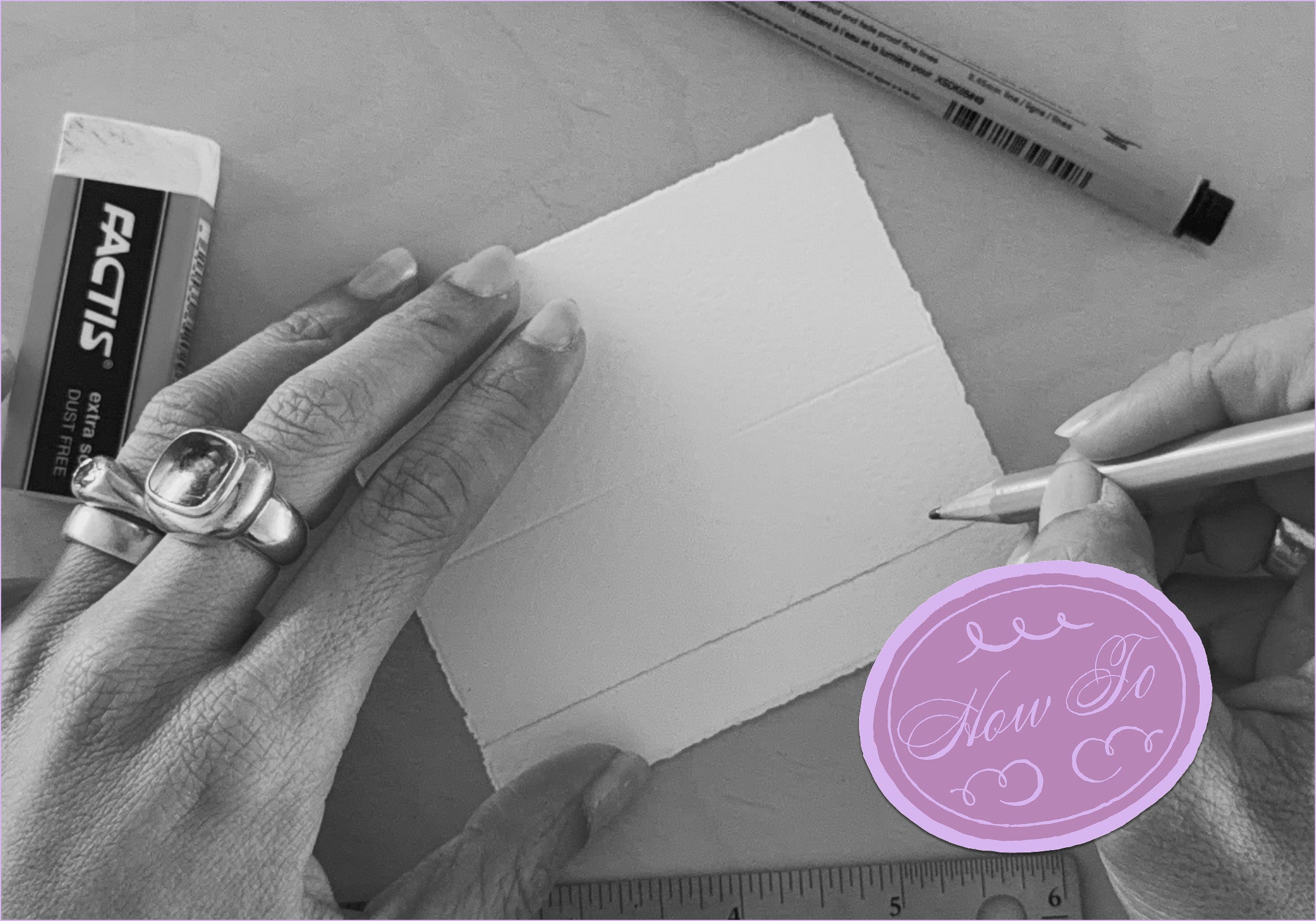
Meet Suzy Lee, a NY-based calligrapher and artist. Born and raised in the border town of El Paso, TX, as a child of Korean immigrants (one of which was a poet), Suzy was born into a world overflowing with diverse language. She found calligraphy as a meditation and art form that helped her give power to good messages. Now based in NYC, she collaborates with iconic brands and creatives to craft memorable guest experiences, creating everything from dinner table place cards to personalizing products and gifts with custom engraving and on-site foiling.
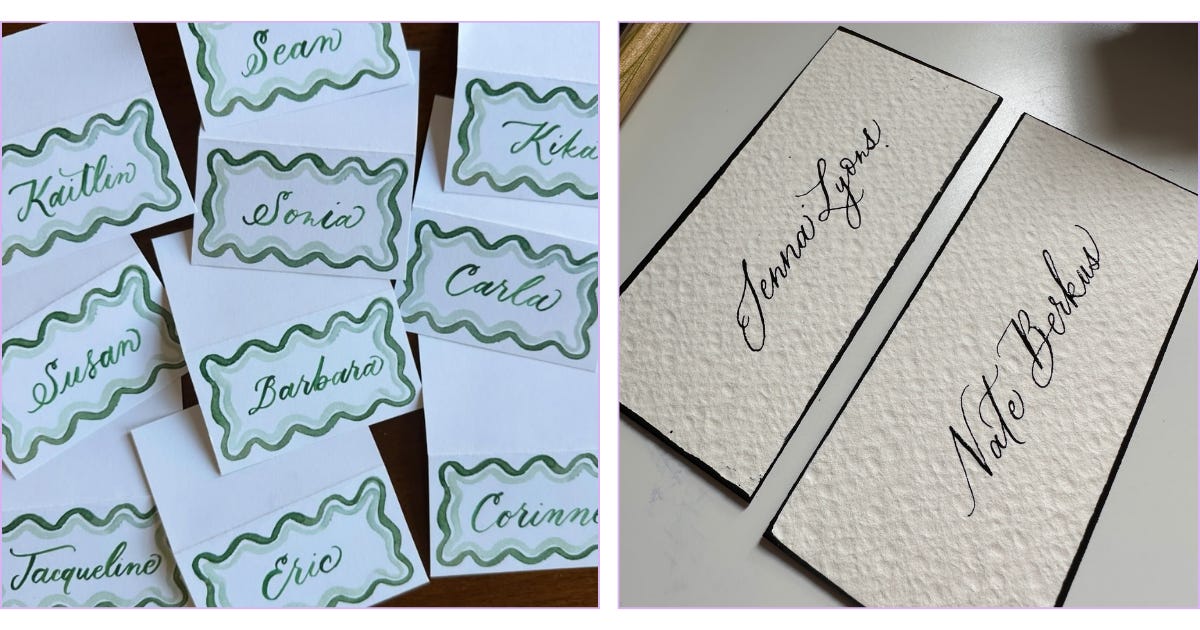
Today, Suzy teaches us what she calls “Faux Calligraphy,” which can be done with any pen, by anyone, and is perfect for dinner place cards.
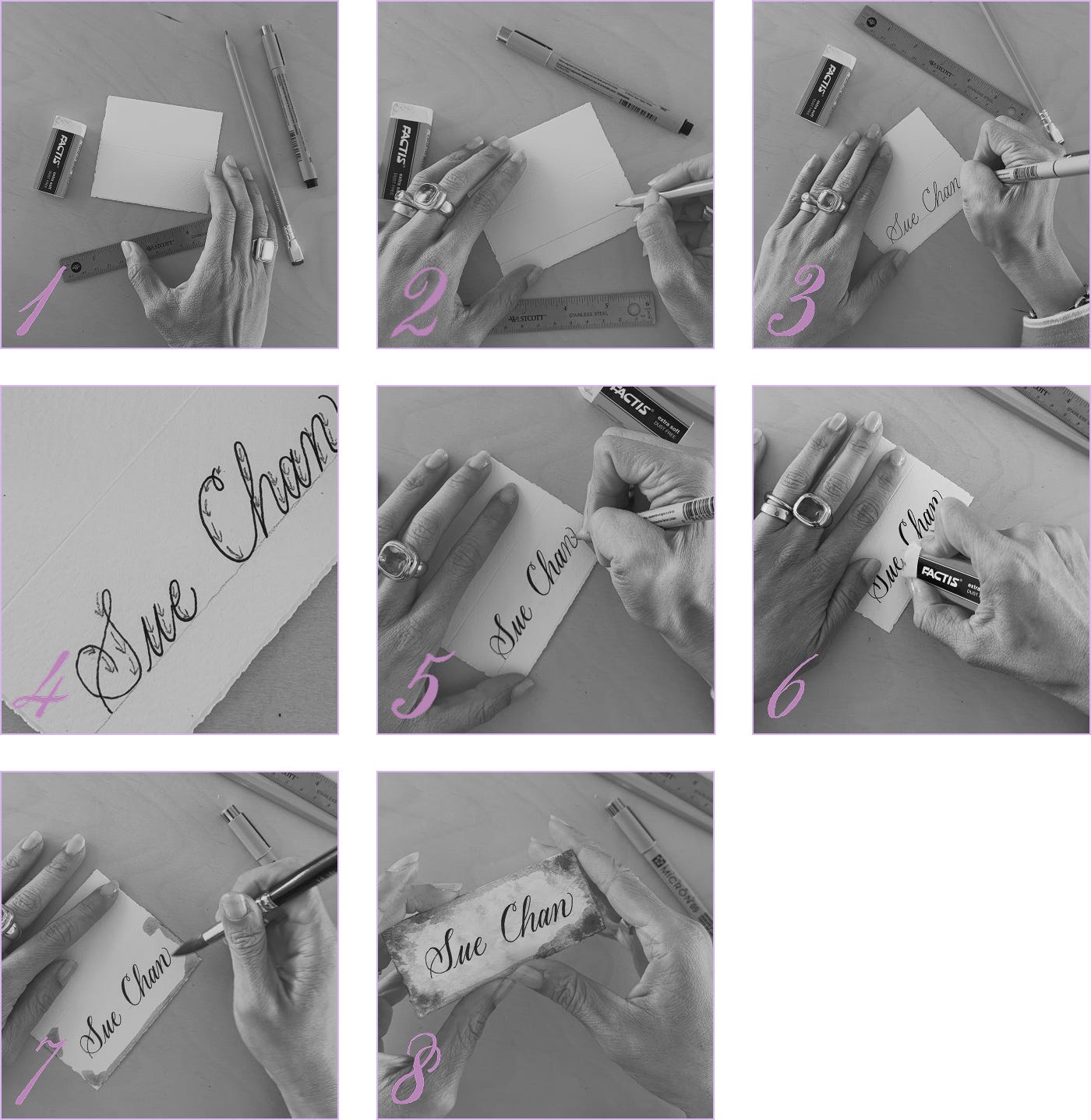
Gather your supplies: A pen of your choice, place cards (always good to have extras for practice and experimentation), ruler, pencil, and eraser.
Draw a base line with your pencil. When placing it, consider how large you want your capital letters to be - make it faint since you will be erasing afterwards.
Write the name in your tidiest cursive.
Identify where your pen went downwards (you don’t have to draw arrows, this is just to illustrate and help you identify your own downstrokes).
Go back over with your pen to thicken your downstrokes - try to make these thick lines uniform in their thickness.
Erase your base line.
Add flourishes like watercolor paint strokes, painted edges, lace edges, ribbons, or floral designs. Most importantly, have fun with it and experiment!
You can also apply this technique to gift tags, envelopes, and more!
For supplies, head to one of Suzy’s favorite supply shops in NYC, which include Yoseka Stationery, Artist Craftsman Supply & City Papery.
To inquire about working with Suzy for an upcoming, email hello@suzyleecalligraphy.com.
Ready to try it out on your own? For all things paper, see The Little Black Book of Stationery Supply Stores below!
Modern etiquette tips
Recently, it seems people have forgotten the art of the thank-you note. When someone has nourished you, given you their limited time, or gone out of their way to accommodate you, it’s worth taking the time to thank them.
“There’s a certain magic to a thank-you note,” the great dame of manners, Emily Post, writes in her book Etiquette. “Receiving one can bring a sense of satisfaction and surprise, even when it’s traditionally expected.”
More excerpts on thank-you notes from Emily Post’s Etiquette, condensed and edited for clarity:
“Think of your thank-you note as an opportunity, not an obligation. It’s an opportunity to develop a skill, make a connection, express your gratitude, and make a good and lasting impression on someone who was generous toward you. When you can, take the opportunity (especially when teaching kids) to handwrite your note. Send it as soon as possible. It’s never too late to say thank you, even if it’s been years. And no, it’s not necessary to send a thank-you note for a thank-you note.”
In a world of e-vites and QR codes, we’ve never been more fond of printed matter, from physical invitations, to handwritten place cards, to thank you notes. Here is our selection of the top shops in New York City (plus some outside of NYC) with precise curation, high quality products, and utter integrity for the craft of analog communication. Consider this your sign to recruit a penpal, near or far.
